
Film adaptations of novels must be difficult to size. If 1,100 pages of Lord of the Rings became 10 hours of film, then 500 pages of Jane Eyre should be about 5 hours. Two TV adaptations of Jane Eyre attempt the distance: the 1983 version at 330 minutes and this, the BBC’s 2006 edition, which comes in at 200 minutes.
The 2006 version dedicates most of its time to the romance at the center of the novel, and does it well. Ruth Wilson as Jane and Toby Stephens as Rochester are electric in their scenes together. That’s no small thing: the oddball romance involves awkward interactions and a lot of inner monologue, but Rochester’s stonewall abrasiveness and Jane’s quiet strength come through even in their first interaction. Then, both actors deftly moderate their standoffishness into friendliness. One of the best performances is when the feelings become manifest: Jane dies inside as Ms. Fairfax tells her about Blanche Ingram.
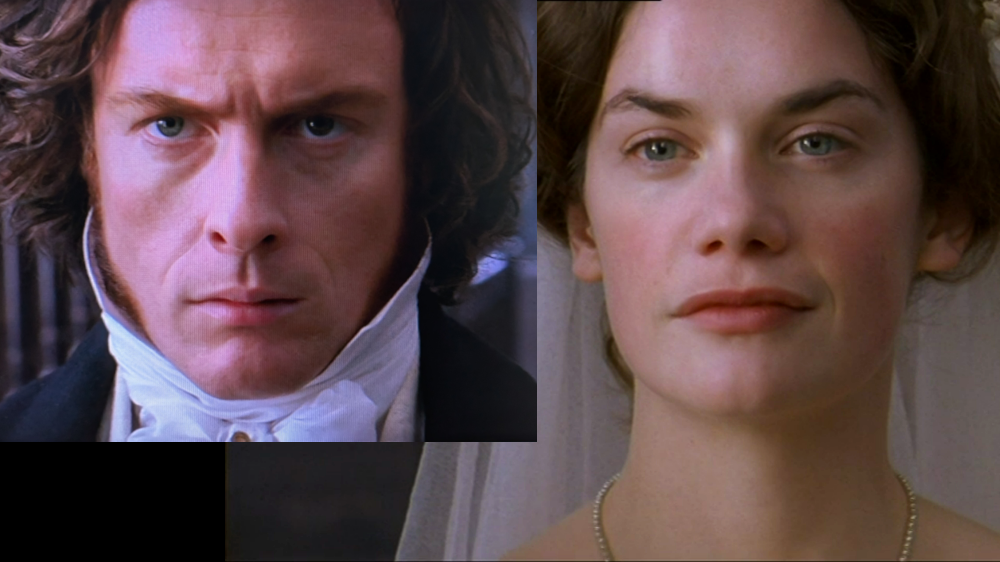 The BBC's definition of two unattractive people
It’s made for television, and many shots have a casually-composed feel, but the miniseries occasionally shows cinematic flair. Key moments show a more thoughtful, painting-like composition. Rochester’s rush to the altar has an ominous feel, with long shadows, barren trees, and a graveyard. To emphasize the coming problem, the couple is walking uphill, with Jane’s body language resistant.
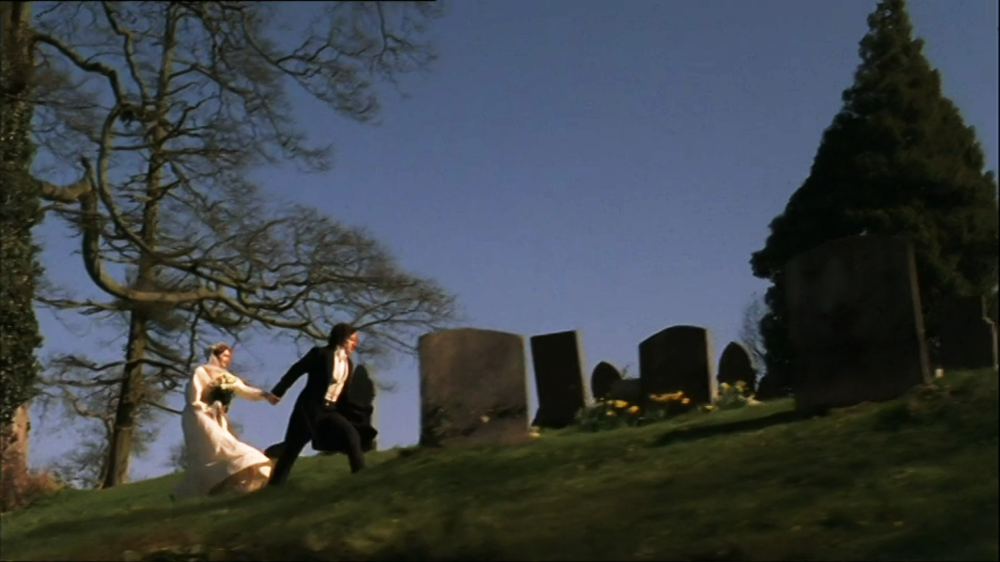 Hustling to the altar
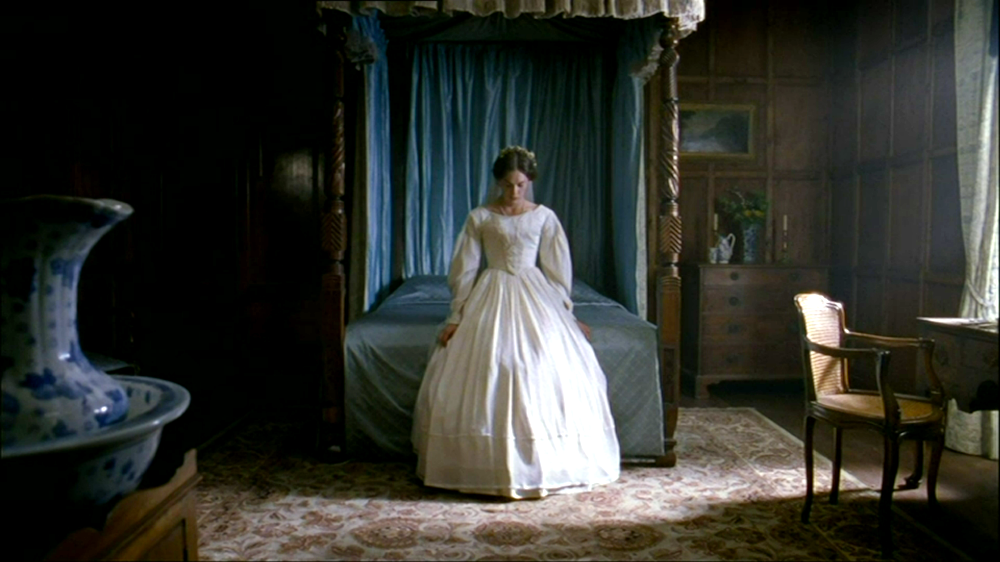
The cinematography conveys Jane’s emotional state using color and exposure. The Lowood scenes are steeped in blue and full of shadows (sometimes too much). The scenes at Thornfield are warm and sunny, and Jane’s moments with Rochester are warm-toned by the fire. After the wedding is stopped, we get a shot of Jane alone in the bridal chamber. In this moment, her life with Rochester is disappearing; keeping with the theme, the sunny light is fading from the windows and the blue shadows are returning to her life.
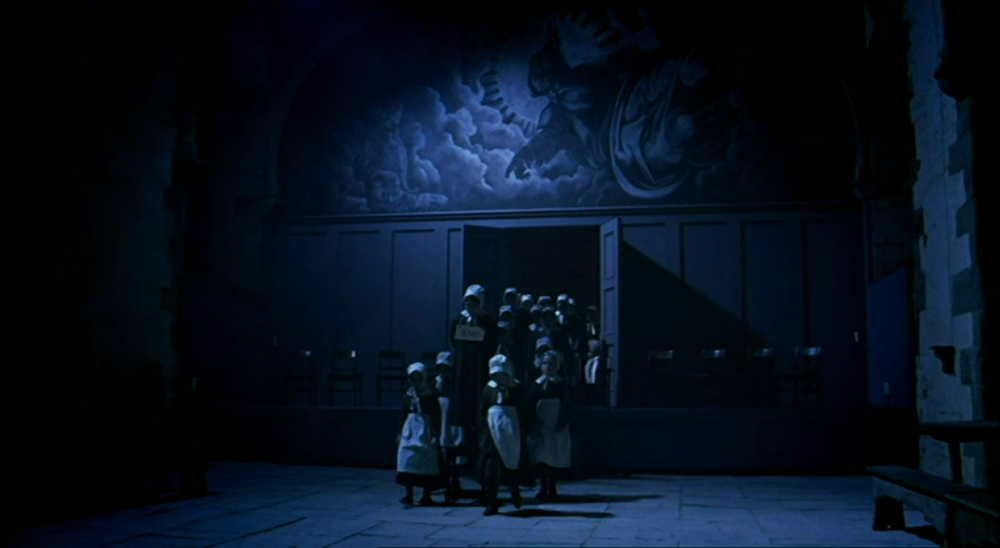
Time is also where the miniseries fell short. It attempts to include scenes from Jane’s childhood, life at Lowood, the friendship with and death of Helen Burns, the death of Mrs. Reed, and St. John’s missionary proposal. 200 minutes wasn’t enough. In some cases, the treatment is so short it could not make sense to viewers who haven’t read the novel. In the televised version of Jane, these fleeting moments also have no bearing on the character.
To people who have read the novel, these scenes are insufficient treatment. Jane’s friendship with Helen is what makes life at Lowood bearable. Her death is devastating. Like, put-the-book-down-sad. The story is poorly served with a rushed version of this. It would have been better to use that time on Jane’s relationship with St. John, Diana, and Mary Rivers, to heighten the revelation that she, with divine grace, fell destitute upon the doorstep of her only living family.
